Restaurant Online Ordering Without Commission Fees

What it actually takes to run takeaway and delivery ordering from your own restaurant website — the setup, the real cost per order, and when a marketplace app is still worth it.

Marketplace delivery apps solved a real problem: they brought you orders from people who'd never heard of you. What they also did was insert a percentage between you and every one of those orders, permanently — including the repeat customers who now know your name and would happily order direct.
Ordering on your own site doesn't replace the marketplaces. It gives you somewhere to send the customers you've already won.
Quick answer: Running ordering from your own website removes the marketplace commission from every order placed there — you still pay your payment processor's card fee, which is a fraction of a marketplace cut. You need a menu with per-item pricing, pickup and delivery rules, a payment processor, and a way to see incoming orders during service. The realistic goal isn't leaving the apps; it's moving your repeat customers off them.
What "no commission" actually means
Be precise about this, because it's where most marketing is misleading. There are three separate costs in an online order:
Cost | Marketplace app | Your own site |
|---|---|---|
Platform commission per order | A significant % of order value | None |
Card processing | Bundled into the commission | Your processor's rate, per transaction |
Software subscription | Usually none | Your website plan, flat monthly |
InMinutes takes 0% of your store transactions — the commission line is genuinely zero. You still pay Stripe or PayPal to move the money, because someone has to process the card. Anyone claiming a truly zero-cost order is not counting the card fee. |
The economics flip on volume: a per-order percentage scales with your success, a flat monthly plan doesn't. The busier you get, the wider the gap.
What you need to set up
1. The menu, as products with prices
Ordering needs more structure than a display menu: each item needs its own price, and anything with variants — sizes, bases, add-ons — needs those as options. This is the step that takes the longest, and it's worth doing carefully once.
2. Pickup, delivery, or both
Decide per order type. If you deliver yourself, define the zone and a minimum order value for it. If you don't deliver, say "pickup only" clearly at the top — nothing burns goodwill like discovering it at checkout.
3. Ordering hours and a kitchen cutoff
Your ordering window is not your opening hours. The kitchen stops taking takeaway before the door closes, and Sunday is different. Set this explicitly, or you'll get orders at 22:50 that nobody can cook.
4. Payment
Connect Stripe or PayPal. Card-on-order rather than cash-on-collection cuts no-shows sharply — a customer who has paid turns up.
5. Somewhere to see orders during service
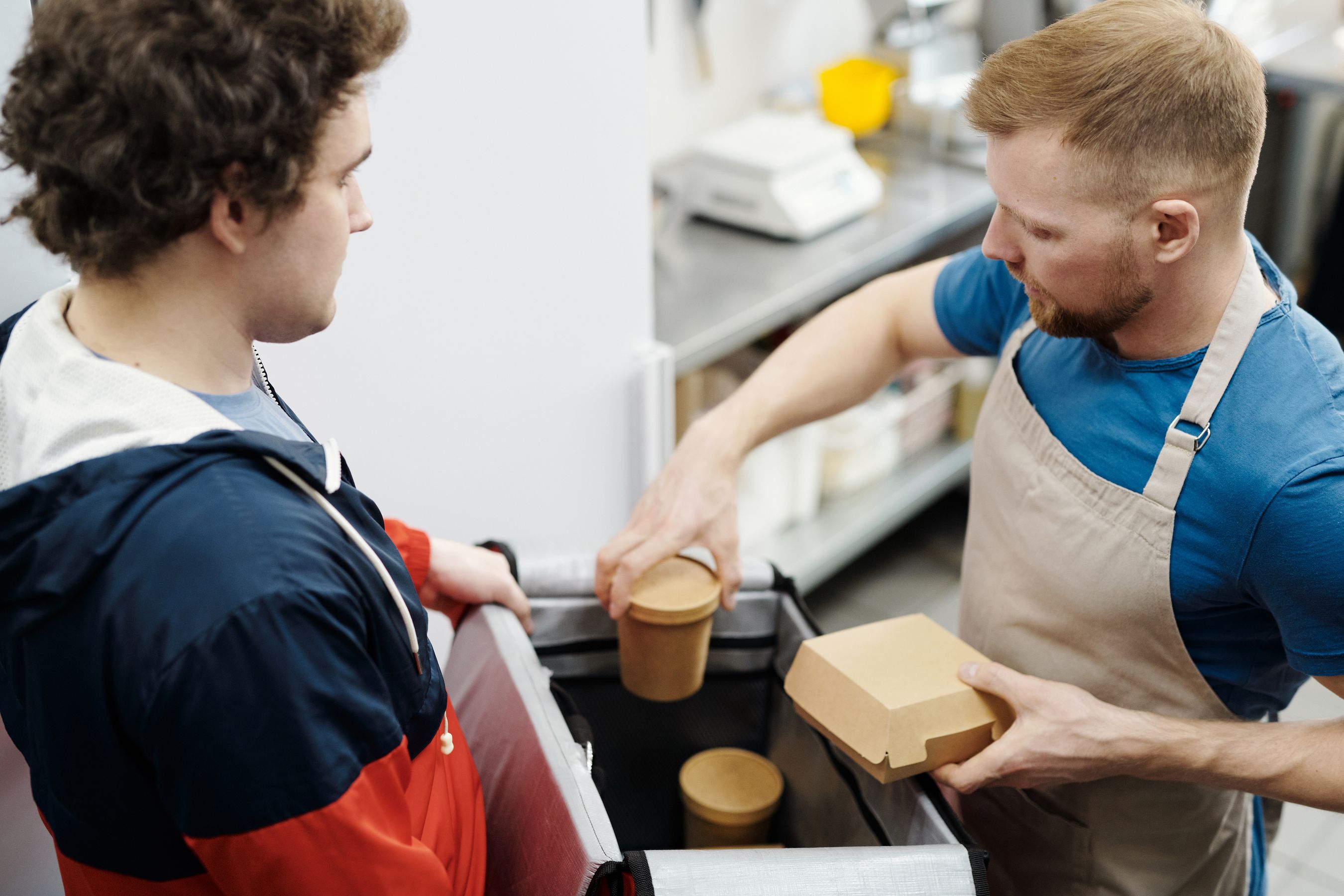
This is the part people forget. An order that arrives silently in an inbox nobody watches at 20:00 is worse than no ordering at all. Before you go live, decide who is watching, on what device, and what sound it makes.
6. A test order, paid with a real card
Place one yourself, end to end, and refund it. You will find something — a wrong tax setting, a delivery zone that doesn't include your own street, a confirmation email in a spam folder.
When the marketplace still wins
Honest answer, because the "cut out the middleman" pitch oversells:
-
Discovery. They have the audience. A new restaurant with no following gets real orders from day one there and roughly zero from its own site.
-
Delivery fleet. If you don't have drivers, they do. Your own site is best for pickup, or for delivery you drive yourself.
-
The customer's default. Some people just open the app.
The workable strategy is both: stay on the apps for discovery, and give every order that leaves your kitchen a reason to come direct next time — a card in the bag with your site and a small discount code costs nothing and moves repeat customers over one at a time.
The gap between the two
Marketplace | Your own site | |
|---|---|---|
New-customer discovery | Strong | Weak |
Cost per order | % of every order, forever | Card fee only |
Customer data | Theirs | Yours |
Menu and pricing control | Constrained | Full |
Ability to email past customers | No | Yes |
Best for | Finding new people | Keeping the people you found |
That "customer data" row is the underrated one. On your own site you know who ordered what, and you can tell them about Sunday's special. On a marketplace, that relationship belongs to the marketplace. |
FAQ
The bottom line
Marketplaces are a customer acquisition channel, not an ordering system. Run your own ordering for the customers you've already earned, and the commission line disappears from every one of those orders. Online store and checkout are part of the Pro plan on InMinutes, with 0% taken from your transactions. Build your restaurant's site free with InMinutes →
See also How to Make a Restaurant Website in 8 Steps and How to Put Your Restaurant Menu Online.

Guides10 min read
Guides11 min read

Guides9 min read

Guides9 min read