The 15+ Best Restaurant Websites of 2026

The sixteen things the best restaurant websites of 2026 have in common — menu-first heroes, one-tap booking, mobile-ready layouts — and how to get all of them without a design agency.

Look at enough restaurant websites and you stop seeing individual designs. You start seeing sixteen or so recurring decisions, made well or made badly. The great ones are not the ones with the most animation — they're the ones where a hungry person on a phone finds the menu, the hours, and the booking button in under ten seconds.
Quick answer: The best restaurant websites of 2026 share a short list of traits — a menu-first hero, real text menus instead of PDFs, one-tap reservations, accurate hours everywhere, fast mobile pages, and honest photography of the actual room. None of them require a custom build. Modern AI website builders produce all sixteen patterns below as a starting point, then let you adjust what doesn't fit.
Below are the sixteen patterns worth stealing, each described by the type of restaurant that does it best. Use them as a checklist against your own site.
1. The menu-first hero
The neighbourhood bistro that gets this right puts one line of text, one photograph, and a View menu button above the fold. No slideshow, no autoplaying video of the kitchen. The single most common request from a restaurant visitor is the menu, and the best sites answer it before scrolling.
2. Reservation-first for counter dining
Omakase counters, chef's tables, and anywhere with twelve seats invert the hierarchy: the booking widget is the hero, because availability is the scarce thing. If you turn people away most Fridays, you are really running an online booking website that happens to serve food, and the design should admit it.
3. The single-page neighbourhood cafe
Small menu, one location, no events. A single scrolling page — menu, hours, address, map — beats a five-page structure that makes people hunt. Fewer pages is a legitimate design choice, not a compromise.
4. Text menus, never PDFs
This is the one that separates good from bad more reliably than anything aesthetic. A PDF menu can't be read on a phone without pinching, can't be indexed properly, and can't be quoted by an AI assistant answering "who does gluten-free pasta near me." The best sites publish menus as real HTML text. We covered the full method in How to Put Your Restaurant Menu Online.
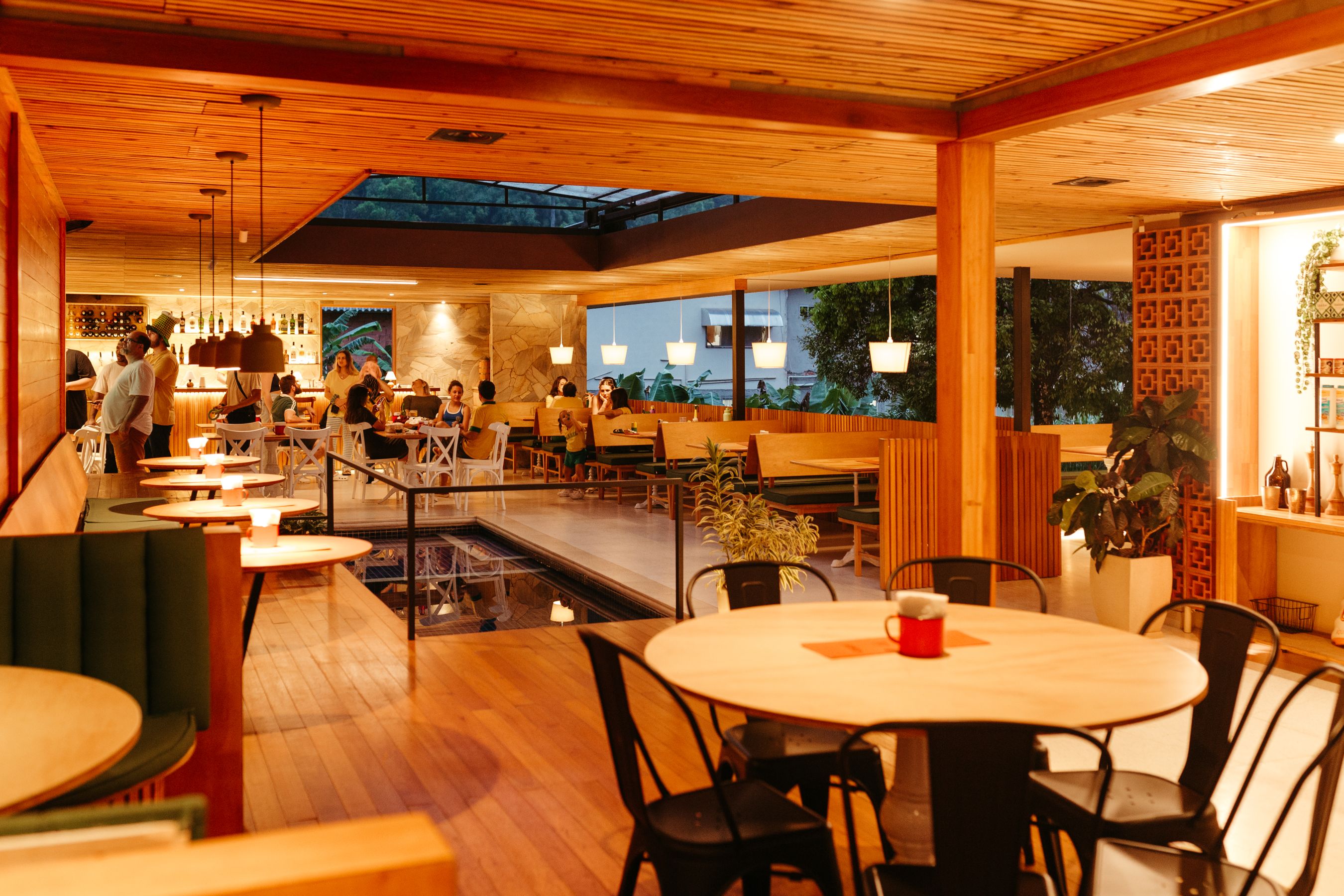
5. Photography of the actual room
Stock photography of a generic plate of pasta tells the visitor nothing and, worse, makes them suspicious. The strongest restaurant sites use ten mediocre real photos over three beautiful fake ones. Shoot the room at the hour you actually look best — usually just after opening, before the tables fill.
6. Hours in the footer of every page
Not on a contact page. Every page. Including today's hours if the platform can manage it, and especially including holiday exceptions.
7. A phone number that dials
On mobile, a phone number that isn't a tel: link is a phone number nobody calls. Same for the address, which should open the map app.
8. Mobile-ready layouts, designed mobile-first
More than three quarters of restaurant site traffic is a phone, often outdoors on poor signal. The best sites are designed at 390px wide first and expanded to desktop afterwards. Mobile-ready website creation is not a checkbox you tick at the end — it's the order you work in.
9. Sub-two-second menu pages
The competitor is the place next door, and the customer is standing between you. Compressed images, no heavy sliders, no five embedded third-party widgets. Speed is a design feature.
10. One primary action per page
Menu page: view menu. Booking page: book. Home: pick one. Sites that offer six equally weighted buttons get fewer clicks on all of them.
11. Ordering that doesn't route through a commission app
The best independent sites take orders on their own domain and keep the margin, using the delivery apps for discovery rather than as the only channel. See Restaurant Online Ordering Without Commission Fees.
12. Structured data doing quiet work
The strongest sites emit Restaurant and Menu schema so search engines and AI assistants can read hours, cuisine, price range, and dishes without guessing. You don't see it, but it's why the site appears with rich detail in results.
13. An about page with a person in it
Independent restaurants win on the thing chains cannot fake. One paragraph about who cooks and why, with a photograph, outperforms three paragraphs of "passion for hospitality."
14. Events and private hire, if you do them
A dedicated page with capacity, minimum spend, and a form. Private hire enquiries are the highest-value form submission a restaurant site receives, and most sites bury them.
15. Multi-page structure when the menu is big
Wine list, tasting menu, lunch, brunch, private dining — once there's this much, a single page stops working. Multi-page website generation matters here: you want each of those as its own indexable URL with its own title, not five anchors on one enormous page.
16. Accessible contrast and real font sizes
Cream text on a pale photograph looks moody on a designer's monitor and is unreadable outdoors. 16px minimum body text, proper contrast, alt text on the food photography.
What this used to cost, and what it costs now
Every pattern above was, until recently, either an agency line item or a weekend of fighting a template. The change is that AI website builders now generate the whole structure — copy, layout, and the underlying code — from a description of the restaurant, and you edit from there rather than starting at a blank canvas.
Concretely, automated business website creation for a restaurant looks like this:
-
AI copy design and code generation — one pass produces the words, the layout, and the working front-end code, not just a wireframe
-
Multi-page website generation — home, menu, about, booking, contact as separate real pages, cross-linked
-
Mobile-ready website creation — phone layout treated as primary, not an afterthought
-
SEO and lead generation — meta tags, Open Graph, and LocalBusiness structured data generated at publish, plus a booking form that actually captures the enquiry
Two more things worth naming, because they are where the time actually goes: fast website creation means the draft exists in minutes rather than after a discovery call, and no-code website development means every edit afterwards is a sentence rather than a ticket.
If you're weighing tools, our website builder comparison for restaurants covers where they genuinely differ. Most are a general small business website builder with a restaurant template layered on top — which is fine, as long as the menu handling and the booking flow survive contact with a real forty-dish menu.
With InMinutes specifically, you describe the restaurant, get a multi-page site back in a couple of minutes, and appointments are included on every plan — including the free tier — so the booking pattern from #2 isn't behind an upgrade. Taking a card deposit at booking time is the part that needs Pro, because it runs through Stripe Connect. Publishing to a custom domain is a paid plan.
The honest limitation: AI web design gives you a strong version of all sixteen patterns, not a bespoke identity. If your restaurant's entire positioning is design-led — the kind of place where the website is part of the art direction — you will still want a designer. For the other 95% of restaurants, the generated version is better than what they have now and takes an afternoon instead of a quarter.
Pattern | Why it matters | Hardest to fake |
|---|---|---|
Menu as text | Search, AI answers, mobile readability | No |
One-tap booking | Direct covers, no commission | No |
Real photography | Trust | Yes |
Sub-two-second pages | Losing to the place next door | No |
Multi-page structure | Each menu gets its own URL | No |
Design-led identity | Positioning | Yes |
FAQ
The bottom line
The best restaurant websites of 2026 aren't the most elaborate ones. They're the ones that answer menu, hours, and booking immediately, load fast on a phone outdoors, and use real photographs. All sixteen patterns are now generatable rather than commissionable. Build your restaurant's site free with InMinutes →
See also How to Make a Restaurant Website in 8 Steps and 7 Restaurant Website Features to Check in 2026.

Design9 min read

Guides10 min read

Strategy11 min read
Guides11 min read