7 Online Store Setup Problems With Website Builders

The 7 most common online store setup problems small businesses hit with Shopify, Squarespace, Wix, and Hostinger — and where AI-led setup removes the friction.

Launching an online store should take an afternoon. For most small businesses using a traditional website builder, it takes weeks — not because they're doing anything wrong, but because the same seven problems show up again and again. Here's what to watch for, and where an AI-led setup removes the friction entirely.
7 Common Online Store Setup Problems
1. Payment processor lock-in
Some platforms — Shopify included — nudge you toward their own payment processor with lower fees, then charge an extra percentage if you use an external one. That's a real cost difference most businesses don't discover until their first invoice.
2. Inventory that doesn't sync with the rest of the site
On Squarespace and similar builders, the store and the rest of the site can be managed through slightly different systems, so updating a product sometimes means checking two places instead of one.
3. Stacking apps just to get basic features
On Wix, features that feel like they should be built in — reviews, upsells, abandoned cart recovery — often require installing separate apps from the marketplace, each with its own settings and, frequently, its own monthly fee.
4. Hidden transaction fees on lower-tier plans
Budget-friendly builders like Hostinger's AI Website Builder are genuinely cheap to start, but ecommerce is usually an add-on, and lower plan tiers can carry transaction fees that erode margin on every sale.
5. The store visually breaking the rest of the site
Adding a store to a site that wasn't designed with one in mind often means a visible seam — different fonts, different spacing, a checkout flow that looks like it belongs to another company.
6. SEO resetting when ecommerce gets added
Product pages frequently ship with generic, auto-generated meta descriptions and no easy way to customize them in bulk, which quietly undoes SEO work done on the rest of the site.
7. No native way to combine booking and a store
If your business needs appointments and product sales — a salon selling retail products, for example — most builders make you connect two separate systems rather than offering both natively.
Quick Comparison: Where Each Builder Struggles Most
| Builder | Most common friction point |
|---|---|
 Shopify Shopify | Payment processor fees if you don't use Shopify Payments |
 Squarespace Squarespace | Store and site content managed separately |
 Wix Wix | Feature-stacking through paid apps |
 Hostinger AI Website Builder Hostinger AI Website Builder | Transaction fees on lower-tier plans |
Where AI-Led Setup Reduces the Friction
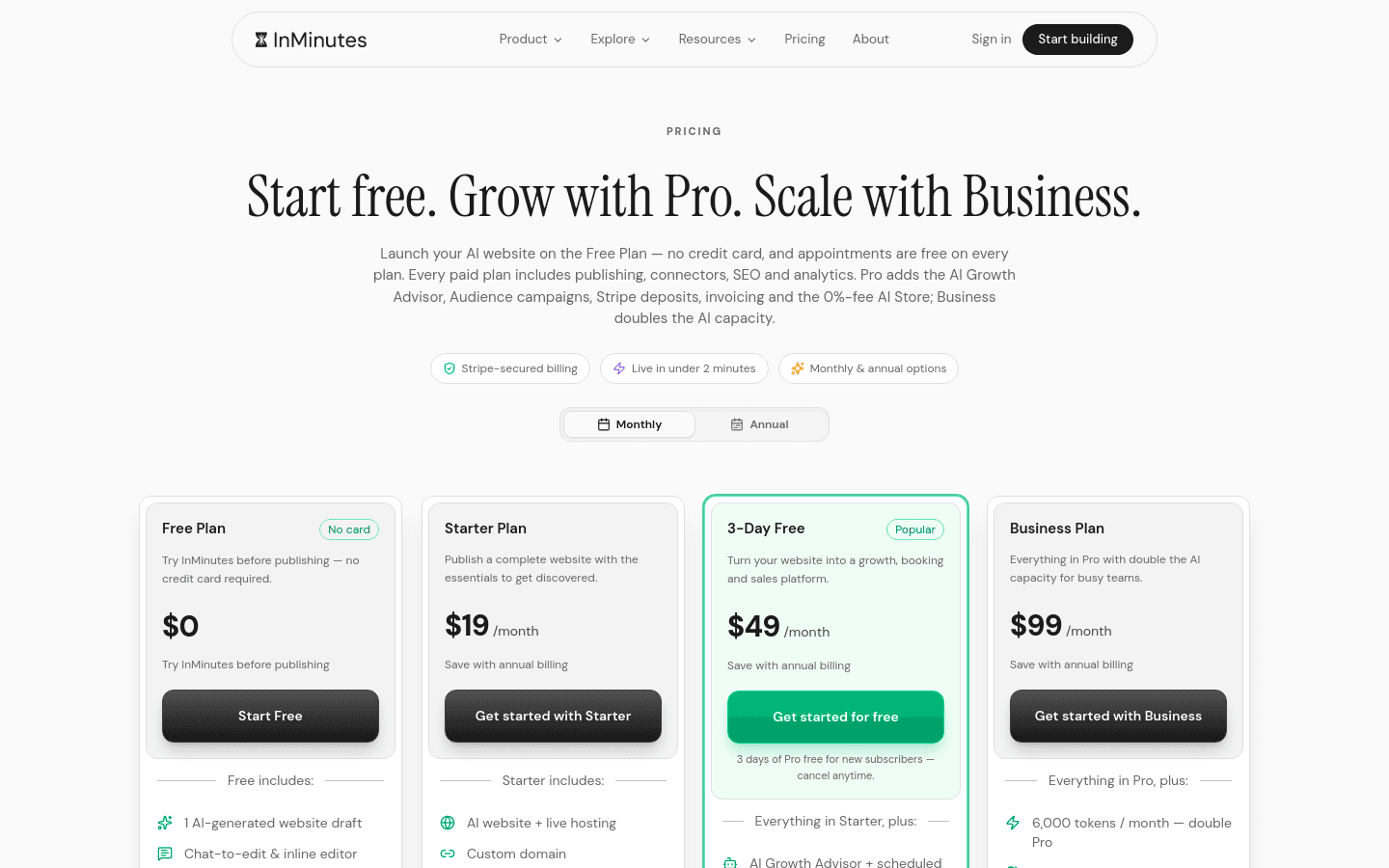
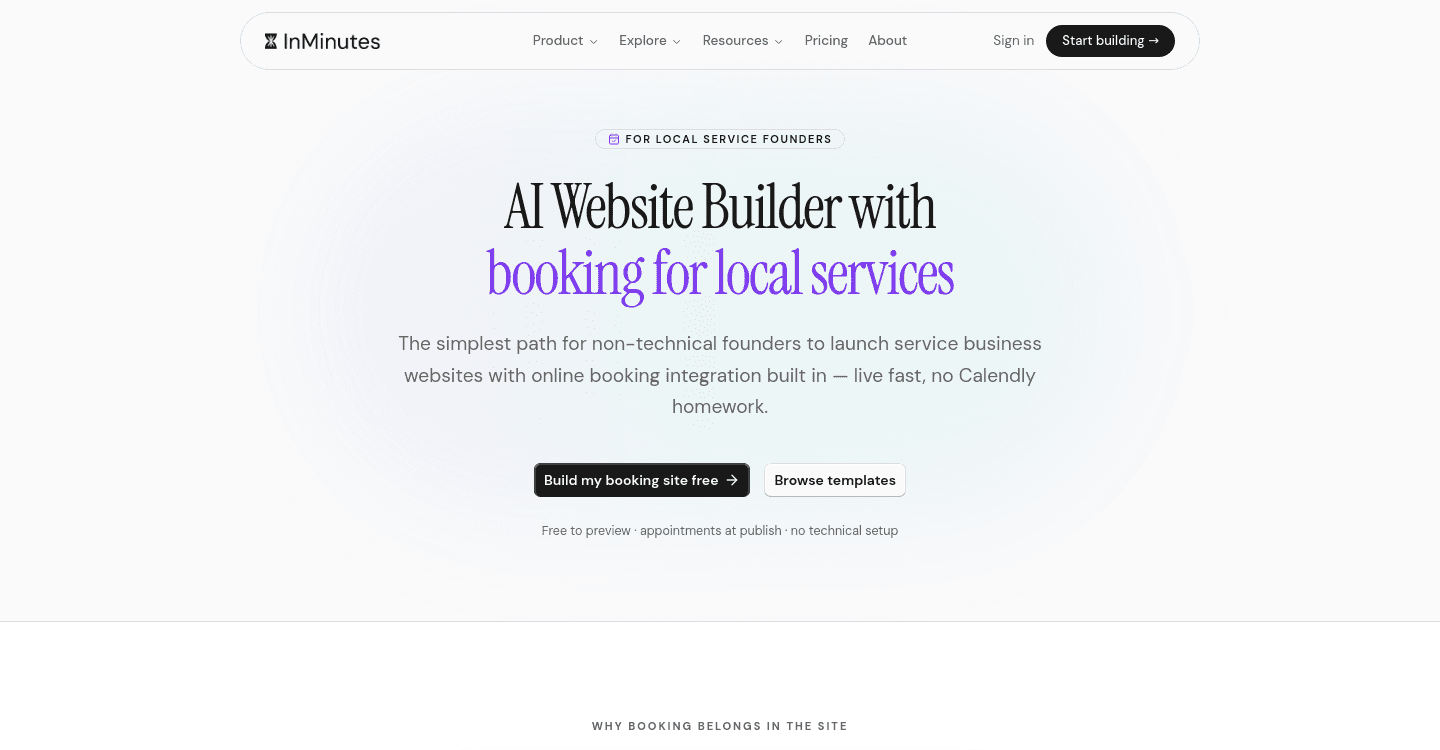
The pattern across all seven problems is the same: the store is treated as a separate system from the rest of the website. InMinutes generates the store as part of the site itself — same design, same dashboard, 0% InMinutes transaction fees, and booking available on the same platform if your business needs both.
FAQ
Bottom Line
None of these seven problems are inevitable — they're a byproduct of treating an online store as an add-on instead of building it into the site from the start.
Ready?
Your site, live in 2 minutes with InMinutes.
No agency. No waiting. Flat monthly fee.
Start for free →